Add Deceased Mom to Wedding Photo
Add deceased mom to wedding photo for bridal portraits, aisle pauses, and family formals that still feel true to the day.
Built for brides and families who want one mother-specific keepsake that belongs in the wedding album instead of feeling like a separate memorial edit.
Mother-of-the-day examples
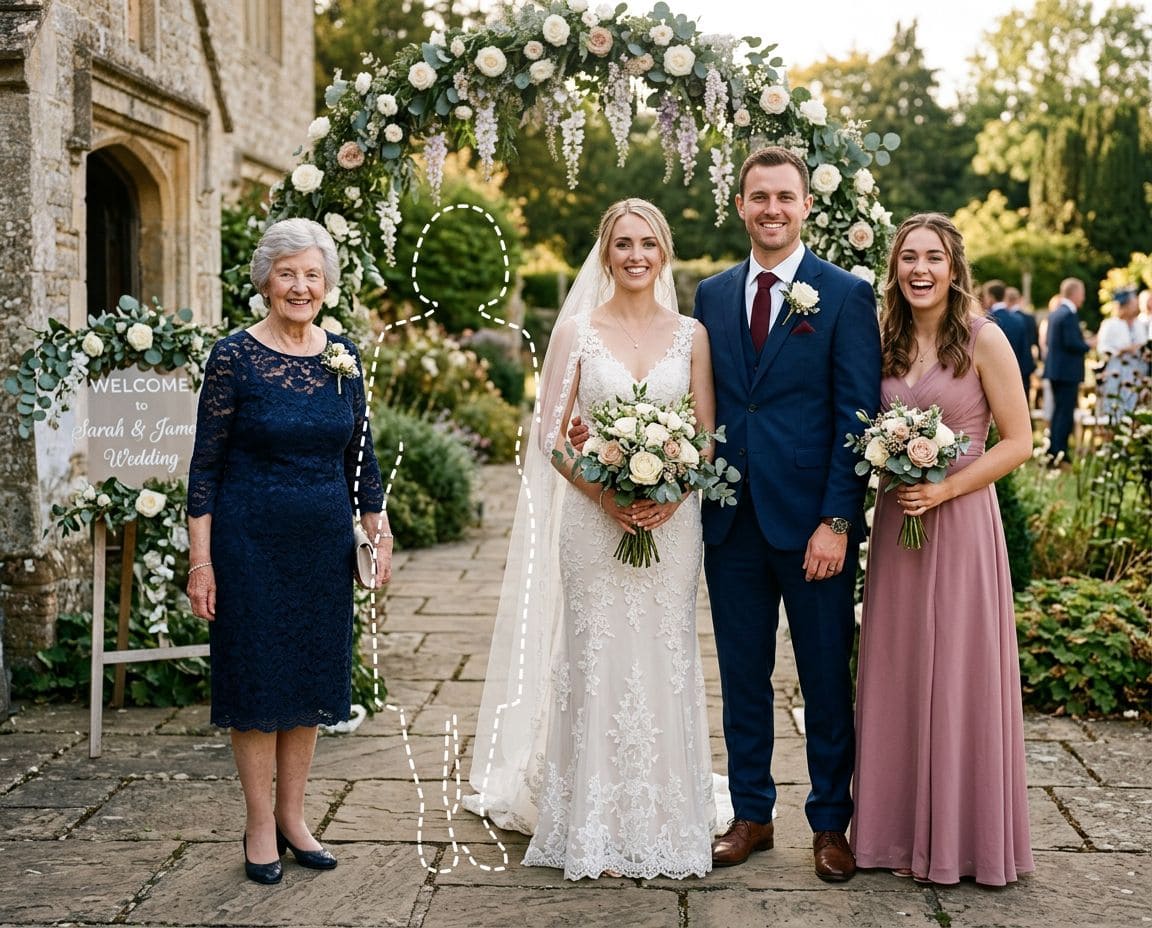
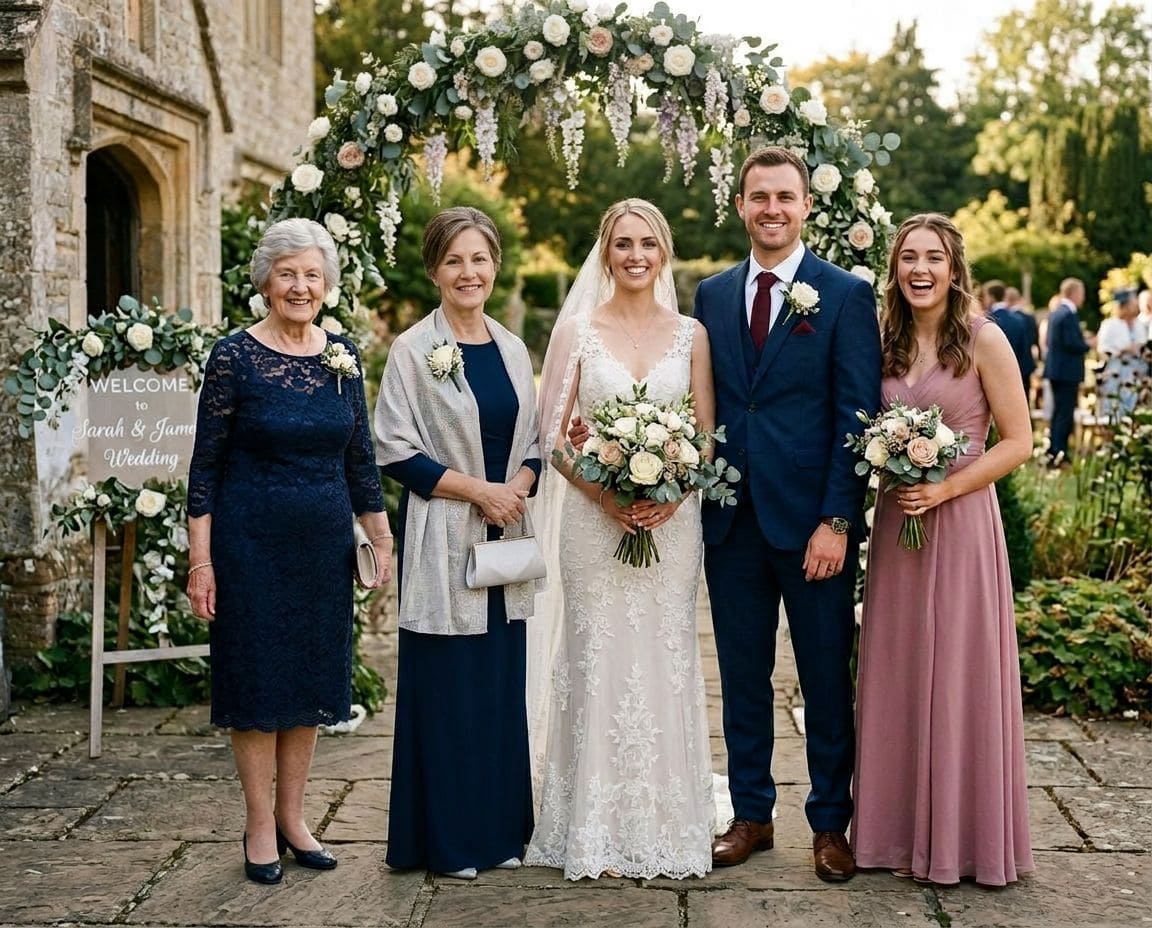
Quick checklist
The strongest result usually starts with one wedding frame that already has a believable place for her.
- Use the original wedding file rather than a screenshot
- Choose a portrait where your mom's face, shoulders, and posture are clear
- Match her placement to the venue angle, bouquet height, and nearby family spacing
Why people search add deceased mom to wedding photo
Many families begin with Add Loved One to Photo or with broader searches such as add deceased loved one to photo and add loved one to photo who passed away. The wording becomes more specific when the missing place in the wedding frame is clearly the mother's place, not just any relative.
That is why people type add deceased mom to wedding photo, add mom to wedding photo after she passed away, or add late mom to wedding photo. They are usually not looking for a dramatic tribute image. They want one believable wedding photograph that can live in the album, sit in a frame, and feel emotionally correct when the family sees it years later.
In practice, this search usually comes from one of three needs: a bridal portrait that feels unfinished, a formal family lineup missing one key person, or a keepsake image meant to become a complete family photo for the wedding story.
Where a mother usually belongs in wedding photos
The most convincing result usually comes from honoring the place your mother would naturally hold on the day. For some brides, that means standing beside the dress or bouquet in a quiet preparation portrait. For others, it means a chapel doorway pause, a family formal outside the venue, or the position next to siblings and close relatives after the ceremony.
Start by asking where she would have been in the real sequence of events. A wedding image becomes easier to trust when her placement follows the story the rest of the frame is already telling.
- Bride-adjacent portraits before the ceremony
- Family formals with clear shoulder spacing
- A calm chapel or venue entrance moment
- Crowded reception dance-floor shots
- Frames with heavy motion blur
- Scenes where no one could naturally stand or sit
Choose source photos that feel true to the day
To include deceased mother in wedding picture naturally, the best source photo is not always the most glamorous portrait. It is the one that still feels recognizably like her while sharing enough posture, light, and perspective with the wedding image.
A clear face, visible shoulders, and calm body angle matter more than dramatic styling. For the main wedding image, use the original file whenever possible. Screenshots and messaging-app copies often flatten fabric texture, skin detail, and edge quality, which makes printed keepsakes look weaker.
- Use the highest-resolution version you have
- Favor a calm frame over a busy one
- Keep a believable opening in the group
- Choose a clear expression and readable hair outline
- Use a portrait with visible shoulders or upper body
- Prefer soft light over hard flash when possible
What makes the result feel natural in print
When families say they want a complete family wedding photo, they usually mean a result that still holds up in print. On a screen, many edits can look acceptable. In an album or frame, viewers notice whether skin tone, bouquet height, shoulder direction, and veil edges still agree with the original scene.
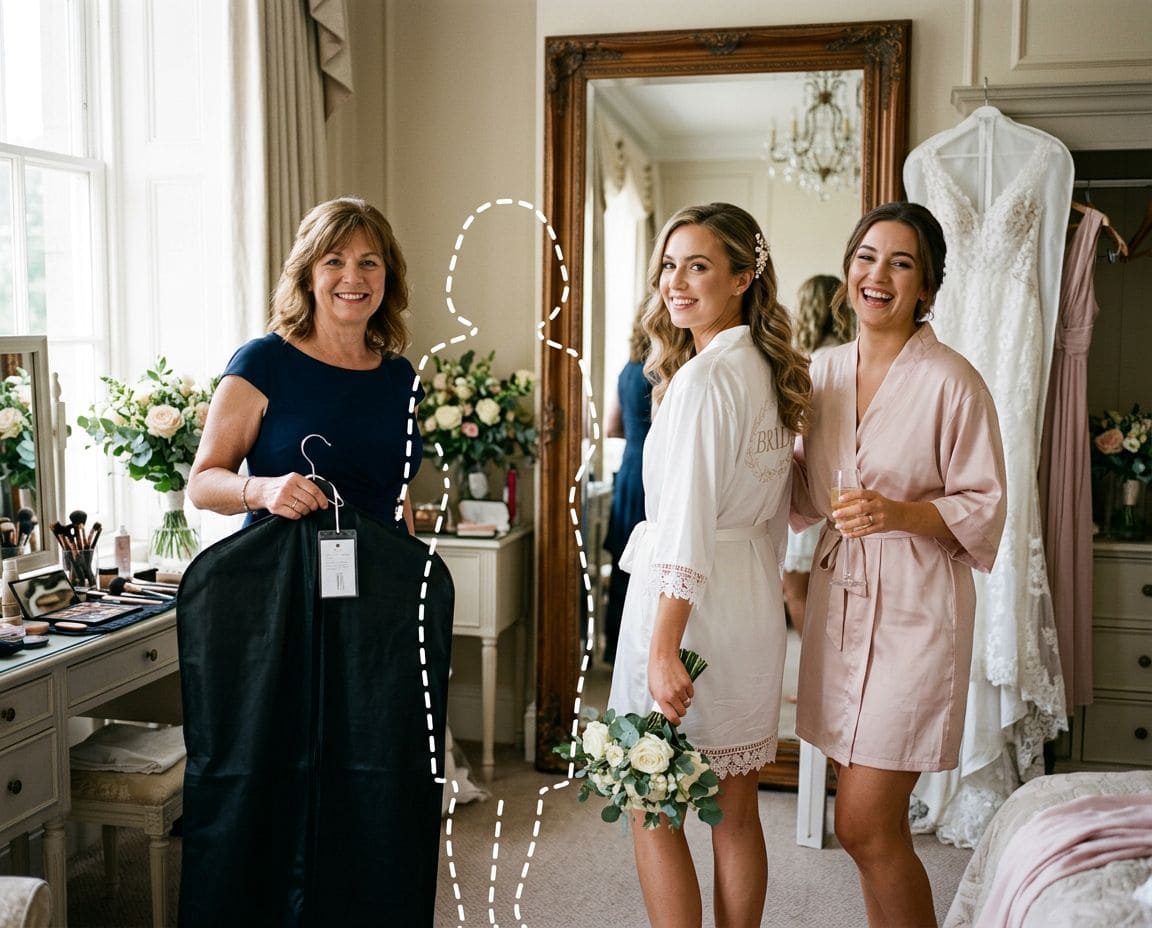
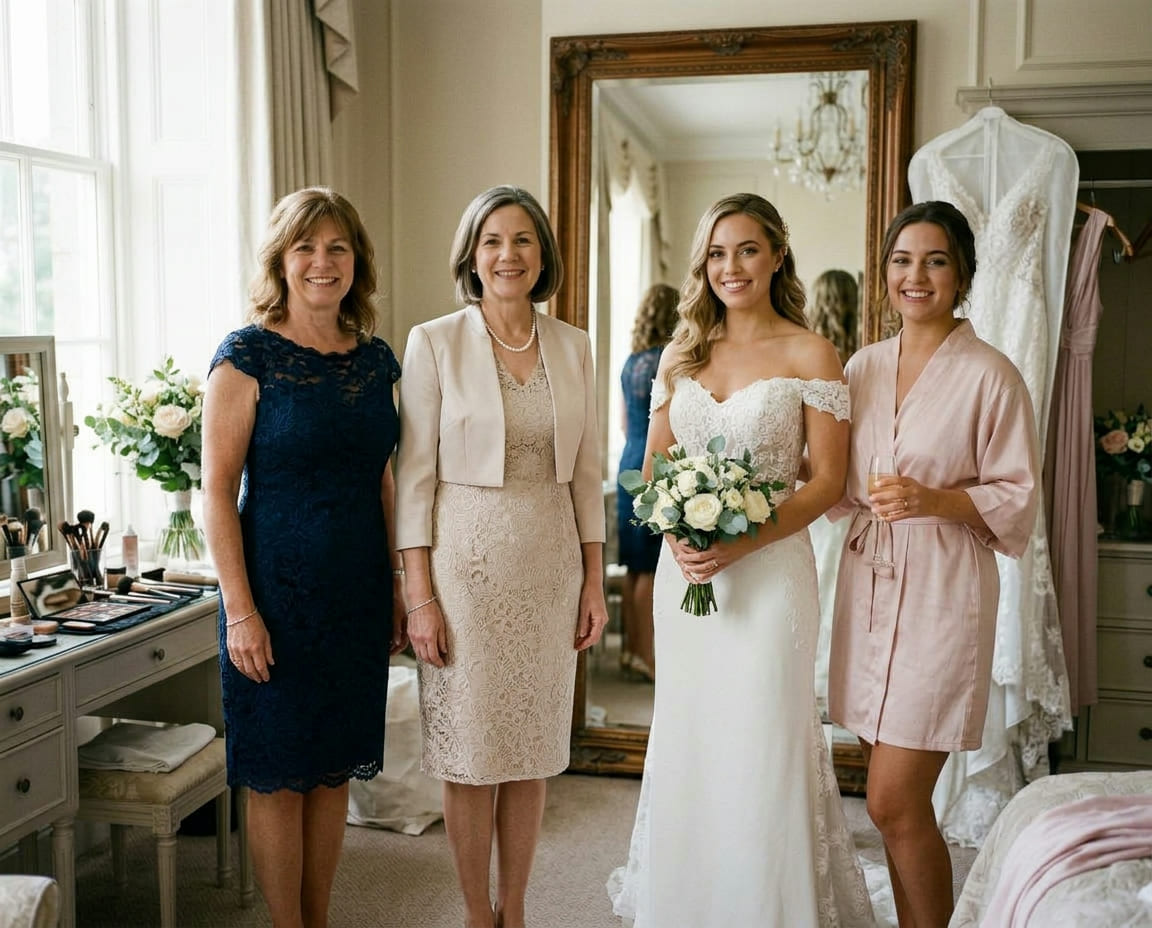
The strongest result usually looks calm, not attention-seeking. It should feel like one wedding frame that happened at one venue in one light, not like two unrelated images forced together.
Wedding moments that work best
This page works best when the scene already has a clear wedding purpose. A getting-ready portrait, a formal family lineup, or a quiet outdoor wedding portrait usually gives the cleanest result because posture and spacing are easier to trust.
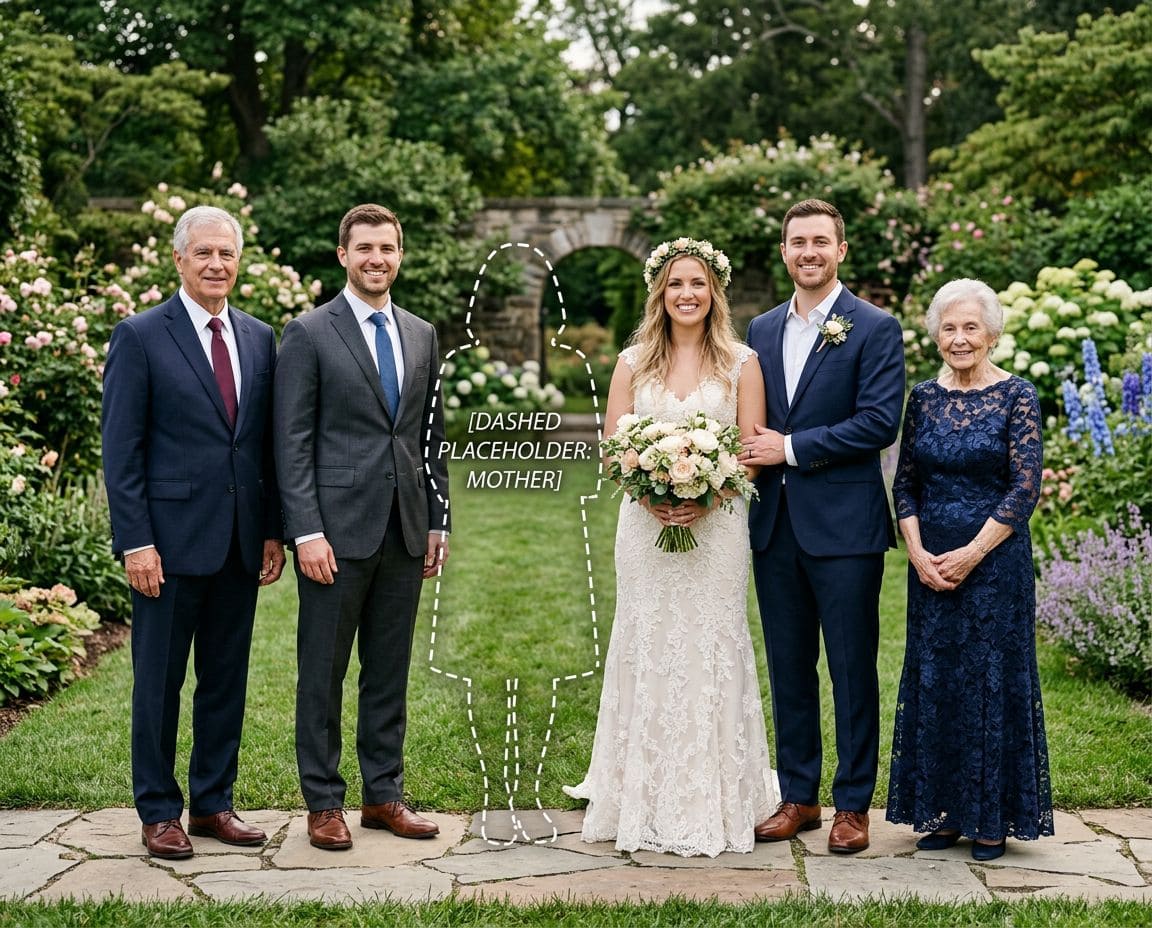
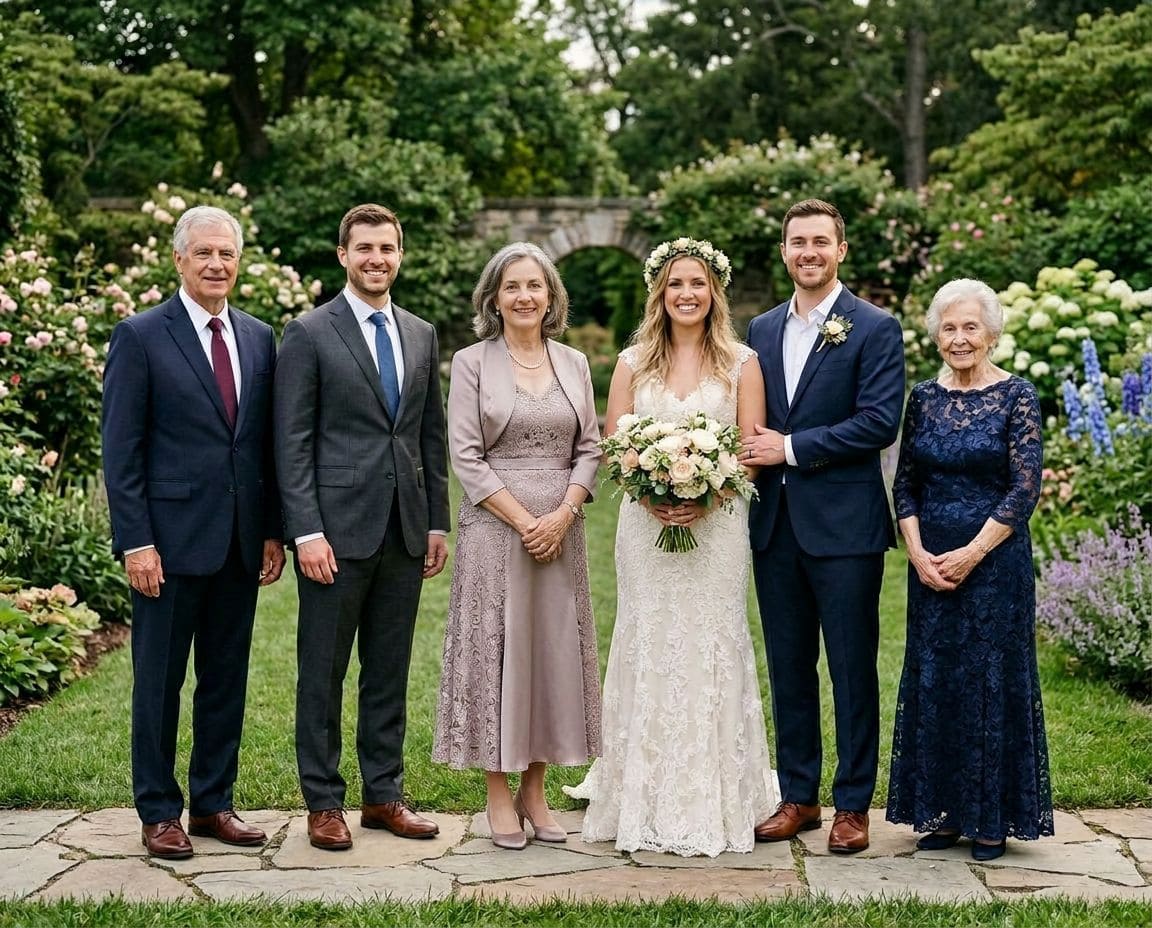
Many couples choose one of these scenes because they are easier to print, easier to share with family, and easier to accept emotionally as part of the real wedding story.
When to use this page instead of a broader memorial page
Use this page when the absence is specifically the mother's absence in a wedding setting. This route is usually a better fit than a broader parent or memorial page when the wedding story, placement, and emotional role are already clearly defined.
Use a broader page when the relationship is still open, when the image is not wedding-specific, or when you are simply exploring general remembrance options before choosing a narrower route.
Common questions
Create your version
Start with the clearest wedding frame you have and one portrait of your mom that still feels recognizably hers. Begin with the calmest and most believable scene if you want the final image to belong naturally in the album.